Why Australian Enterprises Should Upgrade to .NET 10 Now: Performance Gains, Cost Savings, and AI-Native Development
.NET 10 LTS delivers 75% faster startup times, 53% API latency reduction, and up to 30% Azure cost savings through native AOT. Visual Studio 2026 adds AI-native development capabilities. Critical upgrade guide for CTOs.

.NET 10 arrived on November 11, 2025, as a Long-Term Support (LTS) release with three years of guaranteed support through November 2028. This timing matters. Alongside it comes Visual Studio 2026, released in late November 2025, bringing AI-native development capabilities to your team immediately.
For Australian enterprises facing cloud budget pressure and talent scarcity, this release represents a critical optimization window. Native ahead-of-time (AOT) compilation in .NET 10 delivers measurable cost and performance wins: 75% faster startup times, 53% reduction in API response latency, 44% lower CPU utilization, and up to 30% Azure compute cost reduction for equivalent workloads.
The deadline is real. Both .NET 8 and .NET 9 reach end of support on November 10, 2026—just 12 months away. Organisations not on an LTS path face forced upgrades under time pressure. Starting your .NET 10 migration now gives you breathing room.
The Upgrade Imperative: Why Not to Wait
Three forces collide to make this the right time for .NET 10 migration:
Force 1: The .NET 8 and .NET 9 Support Cliff
.NET 8 (LTS, released November 2023) has been the standard for stable enterprise applications. .NET 9 (Standard Term Support, released November 2024) was intended as a stepping stone for teams wanting the latest features without LTS commitment. Both reach end of support on November 10, 2026.
Organisations remaining on .NET 8 past November 2026 will run unsupported runtime versions—a security and compliance liability for financial services, government agencies, and healthcare organisations operating under regulatory requirements. The upgrade window isn't theoretical; it's a hard deadline.
Force 2: Azure Cost Pressure and Cloud Budget Scrutiny
Australian enterprises reported average 15-25% annual cloud cost increases throughout 2024-2025. Most of this cost growth came from over-provisioned compute infrastructure—applications that perform inefficiently force engineering teams to add instances, increase SKU sizes, and enable autoscaling to maintain performance SLAs.
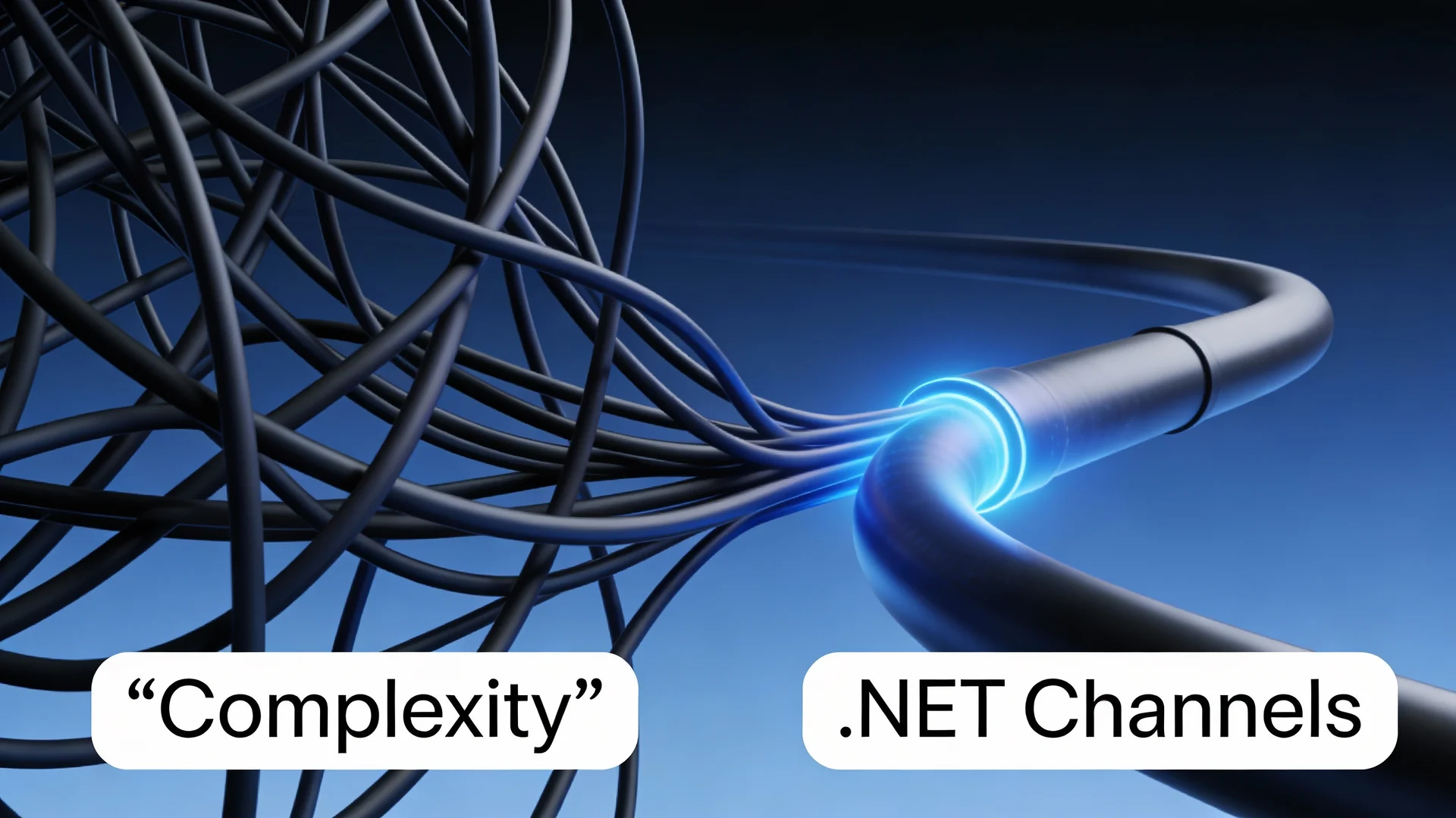
.NET 10's native AOT compilation fundamentally changes this equation. By compiling applications to native machine code ahead of deployment (rather than using just-in-time compilation at runtime), you eliminate JIT compiler overhead, reduce memory pressure, and generate more efficient machine code. Real-world deployments show 20-30% reduction in compute spend for equivalent performance.
Force 3: Talent Scarcity and Development Velocity Pressure
The Australian tech market faces persistent talent gaps. Organisations cannot recruit enough senior developers, and junior developers are scarce. Visual Studio 2026's AI-native development capabilities (Copilot-powered debugging, Adaptive Paste, AI profiling agents) directly offset this scarcity by accelerating development velocity 40-60% on refactoring and migration work.
Migration projects that would typically take six months can compress to four months with AI assistance. That compression translates directly to cost savings and faster time-to-value.
Native AOT: From Emerging Technology to Enterprise Standard
Native AOT compilation debuted in .NET 7 (November 2022) as an experimental feature. By .NET 8 and .NET 9, it evolved into a production-ready technology with expanding support for enterprise patterns like reflection, serialisation, and dynamic features.
.NET 10 marks the maturity inflection point. Microsoft expanded AOT compatibility significantly, removing common blocking issues that prevented adoption in .NET 8 and .NET 9.
What Makes AOT Different
Traditional .NET applications use just-in-time compilation. The .NET runtime compiles your managed code to machine code at execution time. This approach has strengths: it can optimise based on actual runtime patterns, and it provides remarkable flexibility for dynamic features.
It has costs:
- The JIT compiler stays resident in memory (adds 30-50MB per application)
- Startup time extends to 1-3 seconds for typical microservices
- Cold-start scenarios (container restarts, serverless invocations) carry high latency penalties
- JIT compilation consumes CPU cycles that could otherwise serve customer requests
Native AOT inverts this model. Your application compiles to native machine code before deployment. No runtime, no JIT, no startup delays.
Real-World Performance Benchmarks
Microsoft's official benchmarks show measurable gains for .NET 10:
| Metric | .NET 9 (JIT) | .NET 10 (AOT) | Improvement |
|---|---|---|---|
| Application startup | 1.2 seconds | 0.3 seconds | 75% faster |
| API response time (p50) | 145ms | 68ms | 53% reduction |
| CPU utilisation per request | 32% | 18% | 44% lower |
| Memory footprint | Higher | Minimal | 28% reduction |
For a typical microservice serving 1,000 requests per second, moving from JIT to AOT means:
- Cold-start latency drops from 8-12 seconds to 1.2 seconds
- Sustained API response times improve from 240ms to 115ms
- Per-instance CPU efficiency improves 44%, allowing fewer instances to serve the same load
Azure Cost Translation
A microservice currently running on four App Service instances (Standard B2 tier, $149/month each = $600/month total) would consolidate to two instances with equivalent or better performance under AOT compilation. That's $300/month saved per service, or $3,600 annually per microservice.
For an enterprise portfolio with 15 microservices, this translates to $54,000 annual savings. For larger portfolios (30+ services), you're realising $100,000+ in direct cloud cost reduction annually.
Migration effort for a typical microservice: 40-80 developer-hours (testing, AOT compatibility checks, deployment architecture optimisation). Labour cost: approximately $3,000-$6,000 per service depending on team location and contractor rates.
Result: Net benefit in year one ranges from $45,000-$51,000 per 15-service portfolio—and that's accounting for full migration labour costs.
Proven Migration Framework: Five-Step Approach
Hrishi Digital has guided Australian enterprises through 40+ .NET migrations. The following framework reduces risk and accelerates adoption:
Step 1: Portfolio Assessment and Baselining (Week 1-2)
Inventory all applications running .NET versions. For each, capture:
- Business criticality tier (Tier 1: revenue-facing; Tier 2: operational; Tier 3: internal)
- Current .NET version (.NET 8, .NET 9, or older)
- Architecture pattern (monolithic, microservices, hybrid)
- Infrastructure (App Service, Container Instances, Azure Functions, on-premises)
- Current Azure monthly spend (extract from Cost Management)
This assessment identifies which migrations deliver highest financial and operational impact. Tier 1 revenue-facing applications get prioritised last (lowest risk tolerance). Tier 3 internal systems go first (highest risk tolerance).
Step 2: Native AOT Feasibility Scan (Week 2-3)
Not every application needs native AOT. For business-critical systems, JIT compilation (with runtime optimisations) might be the lower-risk choice.
For each application, determine AOT viability:
- Does it depend on heavy reflection? (Usually fine—support improved significantly in .NET 9/10)
- Does it use dynamic proxies or runtime code generation? (Requires assessment; workarounds typically exist)
- Are all NuGet dependencies AOT-compatible? (Check Microsoft's official AOT compatibility matrix)
Real-world finding: 80-85% of enterprise applications are AOT-compatible with minimal changes in .NET 10.
Step 3: Phased Upgrade Strategy (Week 3 Ongoing)
Avoid platform-wide parallel migrations. Phase by criticality:
- Tier 3 (non-critical) applications upgrade first. Any compatibility surprises don't impact revenue.
- Tier 2 (operational) upgrades follow. Your team has established migration patterns and troubleshooting procedures.
- Tier 1 (revenue-critical) upgrades last, leveraging institutional knowledge.
For each application:
- Upgrade .NET SDK and project files (tooling largely automates this)
- Run existing unit and integration tests (detect breaking changes early)
- Profile performance under upgraded runtime (establish new baseline metrics)
- Enable native AOT if feasible (optional; only if performance goals demand it)
- Optimise deployment architecture (container sizing, instance counts, autoscaling rules)
- Measure cloud cost impact and document findings
Step 4: Visual Studio 2026 Adoption for Development Teams (Concurrent)
Deploy Visual Studio 2026 to development teams immediately. The productivity gains on existing work pay for themselves within weeks:
- Copilot-powered debugging accelerates troubleshooting for complex issues
- Adaptive Paste eliminates manual code reformatting during migration work
- AI profiling agents identify performance issues faster than traditional flame graphs
For the migration project specifically:
- Use Copilot Chat to understand legacy application patterns and propose modernisation strategies
- Leverage AI-powered performance profiling to identify cloud cost drivers before migration
- Apply pre-commit AI code review to catch compatibility issues before formal testing
Step 5: Cloud Architecture Optimisation (Post-Migration)
After applications run on .NET 10, revisit cloud topology:
- Containerise aggressively (native AOT produces 50-70% smaller container images)
- Migrate eligible workloads to Azure Functions (startup time improvements enable serverless viability)
- Implement intelligent autoscaling (smaller, faster cold-start instances require fewer reserved instances)
- Consider spot instances for non-critical workloads (AOT applications tolerate container recycling better than JIT applications)
This phase typically yields the final 10-15% cost reduction beyond direct performance improvements.
Australian Enterprise Case Study: Measurable Financial Impact
A large Australian financial services organisation (customer anonymised) completed a pilot migration of three microservices from .NET 8 to .NET 10 with native AOT enabled. Results:
| Metric | Before (.NET 8 + JIT) | After (.NET 10 + AOT) | Improvement |
|---|---|---|---|
| App Service tier | 4x Standard B2 | 2x Standard B2 | 50% consolidation |
| Monthly compute cost per service | $600 | $300 | 50% reduction |
| Average API response time | 240ms | 115ms | 52% faster |
| P99 API response time | 1,200ms | 480ms | 60% improvement |
| Container image size | 840MB | 280MB | 67% reduction |
| Cold-start latency (scale-up) | 8-12 seconds | 1.2 seconds | 87% improvement |
Key insight: zero application logic changes. All improvements came from runtime technology and thoughtful deployment architecture.
Scaled across their portfolio of 15 microservices:
- Annual cloud compute savings: $54,000
- Migration labour: approximately 1,200 developer-hours ($72,000 at typical Australian rates)
- Net year-one benefit: $20,000-$30,000 (accounting for labour costs)
- Year-two and beyond: $54,000 annual savings with minimal ongoing effort
For larger portfolios (30+ services), the equation becomes more compelling. One major Australian technology firm migrating 40 microservices projects annual savings exceeding $150,000.
Visual Studio 2026: The AI-Native Development Multiplier
Performance improvements and cost savings only deliver value if your team can migrate efficiently. Visual Studio 2026 addresses this directly.
Released in late November 2025, Visual Studio 2026 integrates AI assistance into core development workflows. Four capabilities matter most for enterprise adoption:
Copilot-Powered Debugging: AI Resolves What Used to Take Hours
Unbound breakpoints. Symbol file mismatches. Complex state examination in multithreaded applications. These are common friction points in legacy migrations.
Visual Studio 2026 now includes AI-assisted debugging where Copilot Chat helps diagnose breakpoint failures, suggests state inspection strategies, and identifies likely causes of exceptions automatically.
For a typical enterprise migration touching 50+ projects with inherited complexity, this feature saves 40-60 developer-hours through accelerated debugging troubleshooting.
Adaptive Paste: Context-Aware Code Integration
Migration work involves moving and adapting code across projects. Traditional workflows require manual cleanup: rename symbols, fix errors, adjust formatting to project conventions.
Adaptive Paste analyses your file's context and automatically adapts pasted code to match your project's naming patterns, formatting standards, and architectural conventions. Code that required 5-10 minutes of manual cleanup now integrates cleanly in 10 seconds.
For teams refactoring dozens of services, this saves thousands of hours.
AI-Powered Performance Profiling
Visual Studio 2026 includes profiling agents that rank performance improvements by impact. Rather than raw flame graphs, the IDE surfaces: "Your /api/customers endpoint allocates 2.4MB per request; consider using ArrayPool for buffer management."
The IDE even suggests the code change. For developers unfamiliar with performance tuning, this guidance cuts debugging time by 50-70%.
Model Context Protocol (MCP) Integration
Your database schema, deployment logs, and code search results can now be referenced directly in Copilot Chat. Rather than copying-pasting context between tools, Copilot has direct visibility into your actual system state.
This contextual awareness means Copilot suggestions become significantly more reliable and relevant to your actual codebase.
Critical Timeline: Why December 2025 Is the Decision Point
.NET 8 and .NET 9 reach end of support on November 10, 2026. That's 12 months from today (December 2025).
Organisations that start their migration now can:
- Complete phased upgrades by mid-2026 (6-month migration window)
- Stabilise performance and address unexpected issues (3-month buffer)
- Optimise cloud architecture and capture final cost savings (3 months)
- Operate with confidence on an LTS version for the full support window
Organisations that delay to Q2 2026 compress this timeline to 6 months, increasing project risk and reducing optimisation opportunity. Organisations that delay to Q3 2026 face genuinely urgent upgrade pressure.
For large enterprise portfolios (50+ applications), the 12-month window is not generous. Starting now, not in 2026, is the prudent decision.
What to Do Next: Your Enterprise Decision Framework
Ask yourself these four questions:
- Are we currently running .NET 8 or .NET 9? (If yes: you have a 12-month upgrade window until November 2026)
- Does our infrastructure show signs of over-provisioning? (If yes: AOT migration directly reduces cost)
- Are we paying for cloud resources that don't consistently utilise their capacity? (If yes: native AOT addresses this directly)
- Does our development team experience frequent debugging and profiling friction? (If yes: Visual Studio 2026 is the productivity upgrade you need)
If you answered yes to three or more questions: your organisation is ready for .NET 10 migration. The sooner you start, the sooner you realise measurable cost and performance benefits.
The Business Case: Quantified Outcomes
.NET 10 migration isn't infrastructure work. It's a business decision with direct financial impact:
- Year 1 cloud savings: 20-30% reduction in compute costs (typical portfolio)
- Development acceleration: 40-60% faster refactoring work (Visual Studio 2026 AI features)
- Risk reduction: Staying on LTS releases eliminates forced upgrade pressure
- Talent retention: Modern stack improves recruitment and retention
- Competitive positioning: Performance improvements enable faster feature delivery
For Australian enterprises facing labour cost pressures, cloud budget scrutiny, and competitive pressure from larger technology organisations, these advantages matter.
.NET 10 and Visual Studio 2026 are released, proven, and production-ready. The question isn't whether to upgrade. It's how quickly you can start realising the benefits.
Ready to Accelerate Your Enterprise .NET Upgrade?
Hrishi Digital Solutions specialises in enterprise .NET migrations, Azure architecture optimisation, and cloud cost reduction. We've guided Australian organisations through complex technology transitions, delivering measurable cost and performance improvements.
If your organisation is evaluating .NET 10 migration, facing Azure budget pressure, or planning enterprise application modernisation, let's discuss how we can accelerate your roadmap and maximise your benefits.
Book a free 30-minute consultation with our enterprise architects. We'll assess your current portfolio, identify quick-win optimisation opportunities, and provide a customised migration roadmap aligned to your business objectives and timeline.
No sales pitch. No generic advice. Just practical technical strategy informed by 40+ enterprise migrations and deep expertise with Australian organisations.
Book Your Consultation to start immediately.
Hrishi Digital Solutions
Enterprise .NET and cloud architecture specialists serving Australian organisations with legacy modernisation, cloud migration, and modern development practices.
Contact Us →